

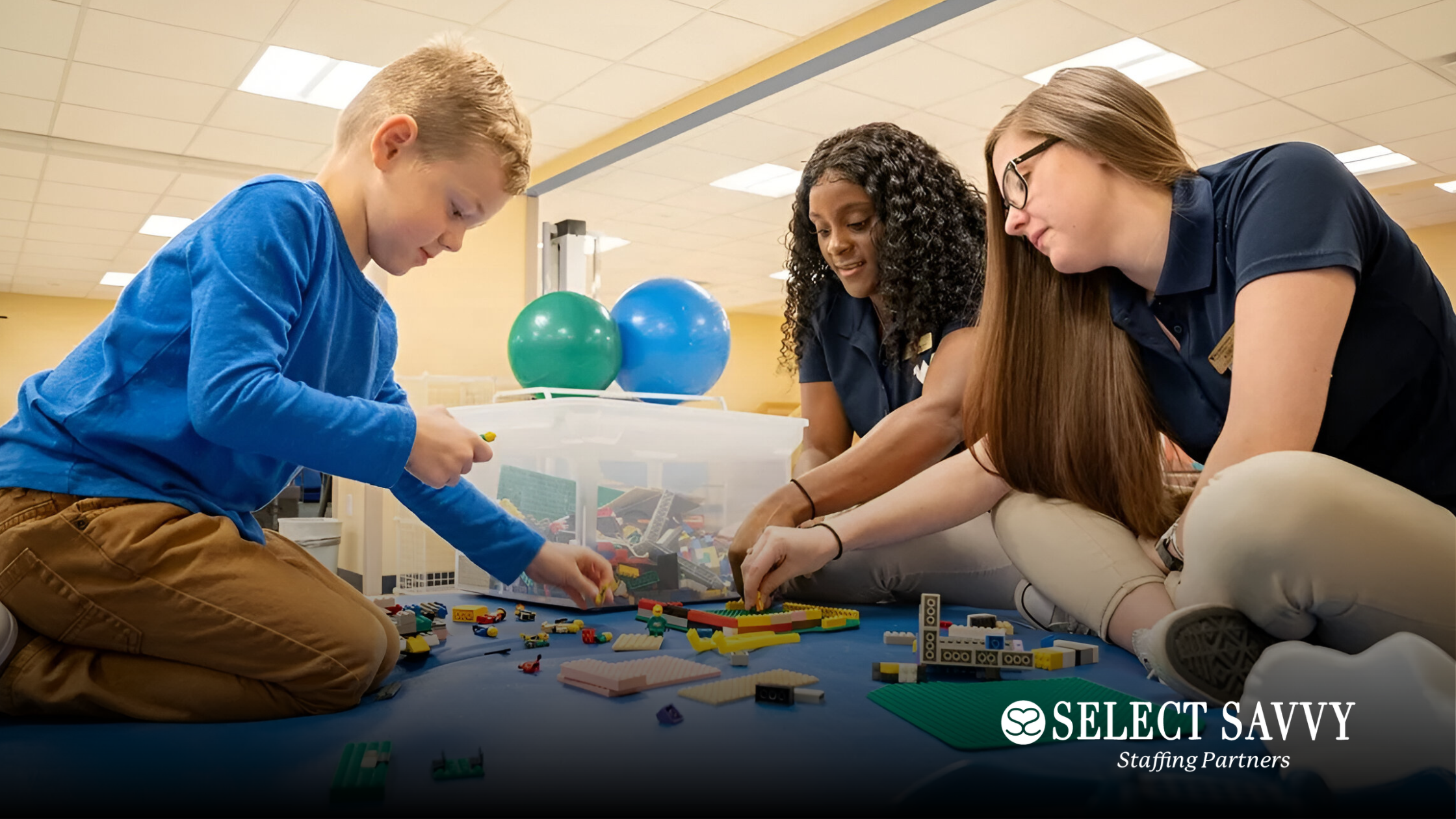
In today’s schools, success is not just about test scores.
It’s about whether a student can write clearly, stay focused, follow routines, and participate in class with confidence.
This is where school-based occupational therapists (OTs) make a real difference.
In 2026, schools are seeing more students who need support with motor skills, sensory regulation, and daily classroom tasks. Occupational therapists help students build the skills they need to become more independent and that independence changes everything.
Table of Contents
What Does a School Occupational Therapist Do?
A school-based OT helps students succeed in the classroom.
Their focus is not medical treatment. Their focus is learning and participation.
They support students with:
- Handwriting and fine motor skills
- Using classroom tools (scissors, keyboards, pencils)
- Staying calm and focused
- Managing sensory overload
- Organizing materials and routines
- Completing daily school tasks independently
According to the American Occupational Therapy Association (AOTA), school OTs help students access their education under the Individuals with Disabilities Education Act (IDEA).
Their goal is simple: help students function independently in school.
A Simple Example
Imagine a third-grade student who avoids writing assignments because their hand gets tired quickly.
An occupational therapist might:
- Teach better pencil grip techniques
- Strengthen hand muscles
- Provide adaptive tools
- Build confidence step by step
Within weeks, that student participates more and feels less frustrated.
That’s what independence looks like.
Why Occupational Therapists Are More Important in 2026
1. More Students Need Support
Over 15% of public school students receive special education services, according to the National Center for Education Statistics (NCES).
Source: https://nces.ed.gov/programs/coe/indicator/cgg
Many of these students benefit from occupational therapy.
As student needs increase, schools must ensure they have enough qualified OTs to meet demand.
2. Inclusion Is Now the Standard
Most schools aim to keep students with disabilities in general classrooms whenever possible.
But inclusion only works when support systems are strong.
Occupational therapists:
- Adapt classroom materials
- Support teachers with strategies
- Help students manage transitions
- Improve participation during group activities
Without proper staffing, inclusive education becomes harder to maintain.
3. Students Need Help With Focus and Regulation
Many students struggle with attention, sensory overload, or emotional regulation.
OTs teach practical strategies that help students:
- Stay calm in busy classrooms
- Transition between tasks
- Improve attention span
- Build daily routines
When students regulate better, classrooms run more smoothly.
The Impact on Schools
Strong occupational therapy staffing benefits everyone.
✔ Students become more independent
✔ Teachers feel supported
✔ Classrooms experience fewer disruptions
✔ Schools stay compliant with IDEA requirements
Source: https://sites.ed.gov/idea/
Independence reduces stress for students and staff.
The Growing Demand for School-Based OTs
The U.S. Bureau of Labor Statistics reports steady growth for occupational therapy careers.
Source: https://www.bls.gov/ooh/healthcare/occupational-therapists.htm
In schools, demand is especially high because:
- IEP caseloads are increasing
- Early intervention is expanding
- Schools focus more on whole-child support
However, many districts struggle to fill OT roles quickly.
How Schools Can Strengthen OT Support
To prepare for 2026 and beyond, schools should:
Plan ahead
Review student data and forecast OT needs early.
Support retention
Offer manageable caseloads and collaborative environments.
Partner with education staffing experts
Working with school-based staffing partners like Select Savvy helps schools connect with licensed occupational therapists who understand educational settings.
➤ Explore school-based occupational therapy opportunities here:
https://selectsavvy.com/job-search
Final Thoughts
Occupational therapists do more than improve handwriting.
They build independence.
They help students regulate emotions.
They support inclusive classrooms.
They strengthen entire school communities.
In 2026, schools that invest in strong occupational therapy staffing will see better outcomes not just academically, but socially and emotionally.
Because when students gain independence, they gain confidence.
And confidence changes everything.